

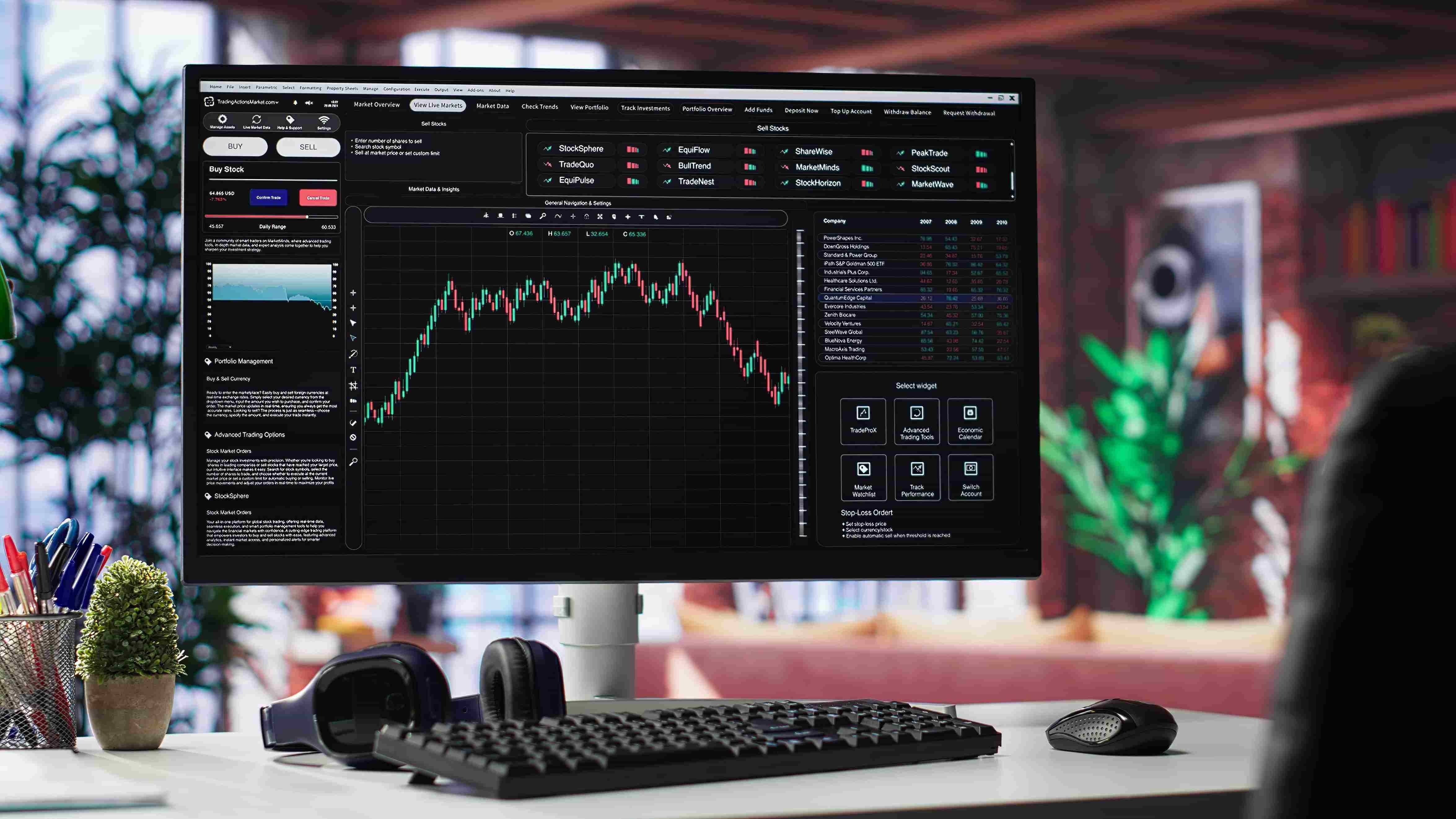
What Is Forex Day Trading?
Why Most Beginners Fail at Day Trading Forex
The Best Currency Pairs for Day Trading in 2026
The Best Time Windows for Day Trading Forex
Four Core Day Trading Strategies That Work in 2026
The Non-Negotiable Risk Management Rules for Day Traders
RISK DISCLAIMER
The 90-90-90 rule is not a trading strategy. It is a warning that every aspiring day trader needs to hear before they deposit a single dollar. According to multiple broker risk disclosures from 2025, 90% of newcomers lose 90% of their capital within 90 days. FINRA data shows that only 1 to 4% of day traders make money over the long term, and 72% lose money overall.
Those numbers are real. And they do not mean day trading forex is impossible. They mean it is genuinely hard, and the traders who walk in without preparation are the ones filling that 90% statistic. The traders who succeed consistently are almost all doing the same things: they define their strategy before they trade, they manage risk on every single position, and they trade specific windows when conditions favour them rather than watching screens all day hoping for something to happen.
This guide covers what day trading forex actually involves in 2026, the pairs and sessions worth focusing on, four core strategies that work in current market conditions, and the risk management rules that separate the 4% from the 96%.
1-4% Of day traders make money long-term — FINRA data
72% Of day traders lose money overall
10-25% Annual returns for the top 25% of experienced retail forex traders
Forex day trading means opening and closing all positions within the same trading day. No trades are held overnight. By the time you close your session, your account has no open positions.
This zero-overnight-exposure rule is both the defining feature and the primary appeal of day trading. You never wake up to a market that moved 200 pips against you during a news event at 3am. Your risk is entirely contained within your active trading window.
The trade-off is time and attention. Day trading requires you to be present and focused during active market hours. You are reading charts, managing positions, and making execution decisions in real time. This is fundamentally different from swing trading where you check your positions once or twice a day.
On MT5, everything you need for day trading is available in a single platform: live charts, one-click execution, economic calendar alerts, and real-time account monitoring through the Terminal panel. Most day traders work from the M15, M30, and H1 timeframes where setups form clearly without the noise of shorter charts or the slowness of daily charts.
"Successful day trading is not about being in the market constantly. It is about being in the right market at the right time, with a defined plan and the discipline to execute it. Most losing day traders trade too much, not too little." — Cory Mitchell, CMT — Trade That Swing, Day Trading Success Rate Report, September 2025
The failure rate is not random. When you look at the specific reasons traders end up in the 72% who lose money, the same causes appear repeatedly across all markets and all brokers.
Most beginners read about a strategy on Monday and try to trade it on Tuesday. Building a strategy means defining specific entry criteria, a stop loss placement rule, a profit target rule, and a position sizing rule — and testing those rules on historical data before applying them with real capital.
Day trading around an unscheduled economic news release is one of the fastest ways to lose. A planned 30-pip trade can become a 150-pip loss when a surprise inflation print or central bank comment hits the market during your trade. Check the economic calendar before every session and avoid holding positions into high-impact events.
The 90-90-90 statistic is driven overwhelmingly by beginners who apply maximum leverage to minimum deposits and get wiped out by normal market volatility. A 2% account risk per trade on a $500 account is $10 of actual risk. That is the correct starting point, not whatever leverage ratio the broker offers.
Day trading forex during low-liquidity hours — like the Sydney session or after the New York close — produces choppy, unreliable price action that looks like signals but rarely follows through. Session selection is one of the most underrated variables in day trading profitability.
Taking extra trades after a losing position to recover the loss is the most reliable way to turn a manageable losing day into an account-damaging one. Every trading plan needs a maximum daily loss rule. When that level is hit, the trading session ends.
Not all currency pairs are equal for day trading. You need sufficient volatility to create tradeable moves, enough liquidity to ensure tight spreads and clean execution, and consistent price behaviour that responds predictably to technical setups.
EUR/USD – With an average daily range of 70 to 90 pips and extremely tight spreads of around 0.1 to 0.5 pips, EUR/USD is one of the most popular currency pairs for day traders. Its high liquidity, clear technical patterns, and strong global participation make it suitable for traders of all experience levels.
GBP/USD – Typically moves 80 to 120 pips per day and has spreads ranging from 0.5 to 1.5 pips. It is known for strong price movements during the London session and reacts actively to UK economic news, making it attractive for day traders seeking larger intraday opportunities.
USD/JPY – This pair generally trades within a range of 50 to 80 pips per day and offers spreads of approximately 0.2 to 0.8 pips. It provides excellent liquidity during the Asian session and often forms clean support and resistance levels.
EUR/JPY – With a daily range of 80 to 120 pips and spreads between 0.5 and 2 pips, EUR/JPY offers good volatility and trading opportunities during the London session and major market overlaps. It is also widely watched as an indicator of market risk sentiment.
GBP/JPY – Known as one of the most volatile major currency crosses, GBP/JPY can move 120 to 150 pips or more per day. Spreads generally range from 1 to 3 pips. Its large price swings create significant profit potential but require disciplined risk management and proper position sizing.
For a beginner starting day trading, EUR/USD is the best starting pair by a significant margin. The combination of the tightest spreads in forex, the deepest liquidity, and the most available educational content makes it the pair where your strategy will receive the fairest test. Spread cost matters more in day trading than in swing trading because you enter and exit multiple times per week.
Forex runs 24 hours a day on weekdays but not all hours are equal. Day traders who try to trade all day typically end up overtrading and making poorer decisions from fatigue. The most successful day traders focus on one or two high-quality windows.
London Open (07:00–10:00 GMT) – This period often brings the first major increase in daily market volatility. Currency pairs frequently break out of overnight ranges as institutional traders enter the market, creating strong trading opportunities.
London Session (07:00–17:00 GMT) – The London session accounts for approximately 35% to 40% of total daily Forex trading volume. Major currency pairs such as EUR/USD and GBP/USD often establish their daily trading range during these hours.
London–New York Overlap (13:00–17:00 GMT) – Considered the most active trading period of the day, this four-hour window generates more than 50% of daily Forex volume. Traders benefit from maximum liquidity, tighter spreads, and smoother order execution.
New York Open (13:00–15:00 GMT) – Many important US economic reports and market-moving events are released during this period. As a result, traders often see strong directional moves and breakout opportunities.
Asian Session (22:00–07:00 GMT) – Day traders generally avoid this session unless trading JPY-related pairs. Market volume is usually lower, price action tends to be range-bound, and false breakouts occur more frequently compared to the London and New York sessions.
The London and New York overlap from 13:00 to 17:00 GMT is the gold standard session for day trading EUR/USD and GBP/USD. On April 3, 2025, EUR/USD cleared 1.1000 after a strong US jobs report and moved 150 pips to 1.1150 within 90 minutes during this window. Traders focused on the overlap with a momentum strategy captured that entire move while traders in the Asian session had no clean setup the entire day.
Every successful day trader follows a version of these rules. The ones who skip them are the ones filling the 72% statistic.
Maximum risk per trade: 1 to 2% of account: On a $2,000 account, your maximum loss per trade is $20 to $40. This means no single bad trade can significantly damage your account. Multiple losing trades will happen. Keeping each one small is what preserves your capital through drawdown periods.
Maximum daily loss: 3 to 5% of account: When you hit your daily loss limit, the session ends. Close your charts, stop looking at price, and come back tomorrow. The most destructive days in trading come from trying to recover losses in the same session.
Minimum risk-to-reward: 1:2 on every trade: If your stop loss is 30 pips, your target must be at least 60 pips. This means you can be wrong on 40% of your trades and still be profitable if your winners are twice the size of your losers.
Never trade without a stop loss: A position without a stop loss is a position where your loss is theoretically unlimited. On a day trading timeframe where news events can move EUR/USD 150 pips in 90 minutes, an unprotected position can wipe a small account in a single session.
Maximum 3 to 5 trades per session for beginners: More trades do not mean more profit. They mean more transaction costs, more emotional decisions, and more exposure to choppy low-probability setups. One or two high-quality setups per session is a more sustainable and more profitable approach than twelve marginal ones.
CFDs are complex instruments and carry a high risk of losing money rapidly due to leverage. A significant proportion of retail investor accounts lose money when trading CFDs. The statistics cited in this article regarding day trader profitability and success rates are sourced from publicly available research including FINRA data, broker risk disclosures, and independent trading research. Trading strategies described are for educational purposes only and do not guarantee profitable outcomes. Past performance of any strategy is not indicative of future results. All trade examples are illustrative only. This content does not constitute financial advice or a trading recommendation. Please seek independent financial advice before making any trading decisions.