

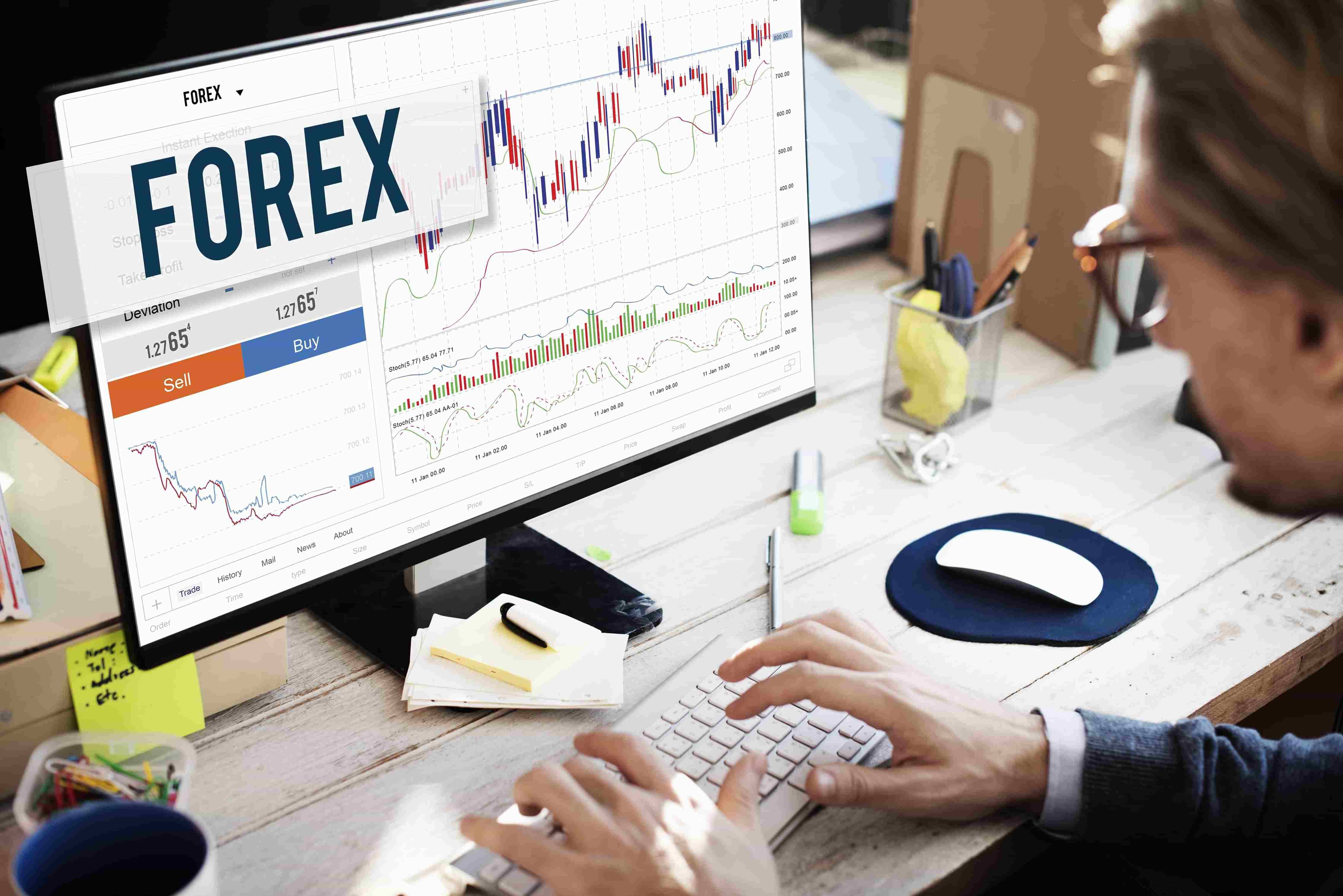
What risk management in forex really means?
Why most forex traders lose money?
The rules that separate winners from losers
The math that proves why this works
What I tell every new trader
The bottom line
Disclaimer:
I have watched far more traders destroy their accounts through bad risk management than through bad analysis. That is the uncomfortable truth nobody wants to hear when they first start trading currencies. Most people believe winning at forex is about predicting the next big move. It is not. The traders who survive year after year are the ones who decided, before anything else, how much they were willing to lose. Everything in this guide comes from that one idea.
Let me walk you through the rules that create the real gap between the people who keep their money and the people who quietly hand it over.
Risk management in forex is the set of rules you use to control how much money you can lose on a single trade and across your whole account. It is not a secret indicator or a magic strategy. It is the boring discipline of deciding your loss in advance, sizing your position around that loss, and refusing to break your own limits when emotions get loud.
Think of it like the brakes on a car. The brakes do not make you fast. They make it safe to go fast. Forex risk management works the same way. It keeps you in the game long enough for your edge to actually play out.
The numbers are blunt. Under European regulation, brokers are required to publish how many of their retail clients lose money, and those disclosures consistently show that between 74 and 89 percent of retail accounts end up in the red. The US futures regulator, the CFTC, has pointed to roughly two out of three retail forex traders losing money in any given quarter. In late 2025, the UK regulator reported that its retail protections stop close to 400,000 people a year from risking more than their original stake.
And remember, this is happening inside the largest market on earth. The Bank for International Settlements reported that global currency turnover reached 9.6 trillion dollars per day in April 2025, the highest level ever recorded and up 28 percent from three years earlier. So the money is real and the opportunity is real. The problem is not the market. The problem is that most people risk too much, too fast, with no plan for being wrong.
Paul Tudor Jones, one of the most respected macro traders alive, built his entire reputation on putting defense before offense, protecting capital first and chasing profit second. That order is the whole point. Winners think about the downside before they ever think about the upside.
Never risk more than 1 to 2 percent of your account on a single trade. This one rule does more heavy lifting than any strategy you will ever buy.
Here is why it works. If you risk 1 percent per trade, you can lose ten trades in a row and still hold roughly 90 percent of your account. You stay alive. If you risk 20 percent per trade, three bad trades can wipe out more than half of everything you own. The market does not need to be clever to beat you. It just needs you to size too big at the wrong moment.
On a 10,000 dollar account, 1 percent is 100 dollars. That 100 dollars is your maximum pain on the trade, full stop. Every other decision is built around protecting it.
A stop loss is the price where you accept that you were wrong and get out. Set it before you click buy or sell, never after. The moment you are already in a trade, your brain starts bargaining, and bargaining is exactly how a small loss turns into an account killer.
Your stop should sit at a level that truly invalidates your idea, not at a random round number. If the chart says your setup is broken at a certain price, that is your line. Place it there first, then let your position size adjust to fit it, not the other way around.
Risk to reward is how much you stand to gain compared to how much you are risking. A solid habit is to aim for at least 1 to 2, meaning you target twice what you put on the line.
Why does this matter so much? Because it means you do not have to be right very often to come out ahead. With a 1 to 2 ratio, you can lose more than half your trades and still grow your account. The best traders stop obsessing over their win rate and start obsessing over how much they make when they are right versus how little they lose when they are wrong.
Leverage lets you control a large position with a small deposit. Offshore brokers sometimes offer 1 to 500 or even higher. It feels like power. It is the fastest known way to lose everything.
Leverage multiplies your wins and your losses by the exact same factor. At high leverage, a tiny move against you can erase your full deposit before you even react. Your real risk is set by your stop loss and your position size, not by how much leverage your broker dangles in front of you. Experienced traders use far less leverage than they are offered. Beginners use all of it and then wonder what happened.
Controlling risk on one trade means little if all your trades are secretly the same bet. If you are long EUR/USD, long GBP/USD, and long AUD/USD at the same time, you are really making one giant bet against the US dollar. A single dollar headline hits all three at once.
Cap how much of your account is exposed at any moment, and pay close attention to pairs that move together. Three correlated trades at 1 percent each can behave like one 3 percent trade the instant the market turns.
The most dangerous person at your trading desk is you, right after a loss. Revenge trading, doubling down to win it back, and ripping out stop losses are the habits that quietly destroy accounts. Set a daily loss limit, say 3 percent of your account, and when you hit it, you are done for the day. No exceptions, no negotiations.
Trading psychology is not soft talk. It is risk management wearing different clothes. A rule you abandon under pressure was never really a rule.
Small losses are easy to recover from. Big losses are not. This is the part most beginners never sit down and calculate.
If you lose 10 percent of your account, you need to make about 11 percent to get back to even. Painful, but fine. If you lose 25 percent, you now need a 33 percent gain to recover. If you lose 50 percent, you need to double your money, a full 100 percent gain, just to return to where you started. Lose 75 percent and you need a 300 percent gain. Almost nobody ever comes back from that.
This is the entire reason the 1 percent rule exists. It keeps your losses in the zone where recovery is realistic. Protect the downside, and the upside takes care of itself.
Here is a quick worked example. Say you have a 10,000 dollar account and you risk 1 percent, which is 100 dollars. You spot a EUR/USD setup with a 20 pip stop loss. Your maximum loss per pip is 100 divided by 20, which is 5 dollars per pip. That points you to a position of about half a standard lot. Notice what just happened. You did not pick the position size first and hope it worked out. You started from the loss you could accept and worked backward. That is how professionals size every single trade.
After years around the markets, the advice I give has barely changed. Survive first, profit second. Your only real job in the early days is to not blow up. If you can string together months without a catastrophic loss, you give your strategy and your skill enough time to compound into something real.
A senior risk manager I worked with put it as plainly as it gets. Amateurs ask how much they can make. Professionals ask how much they can lose. That single shift in the question separates the two groups more than any indicator ever will.
So before your next trade, answer three things. How much am I risking, in money, not in feelings. Where is my stop, and is it set before I enter. What is my reward if I am right. If you cannot answer all three instantly, you are not ready to take the trade.
Risk management in forex is not the exciting part of trading, but it is the only part that decides whether you are still here in a year. Winners are not the best predictors. They are the best at staying alive. Risk a small fixed amount, set your stop before you enter, demand a fair reward, respect leverage, control your total exposure, and never let emotion override your rules. Do that with discipline and you have already beaten most of the people who lose.
This content is for educational purposes only and does not constitute financial, investment, or trading advice. Forex and CFD trading carries a high level of risk and may not be suitable for all investors. Leverage can work against you as well as for you, and you may lose some or all of your invested capital. Past performance and any examples shown are illustrative only and do not guarantee future results. The statistics referenced reflect publicly available regulatory and industry data as of now and may change over time. Always do your own research and consider seeking advice from a licensed financial professional before trading.